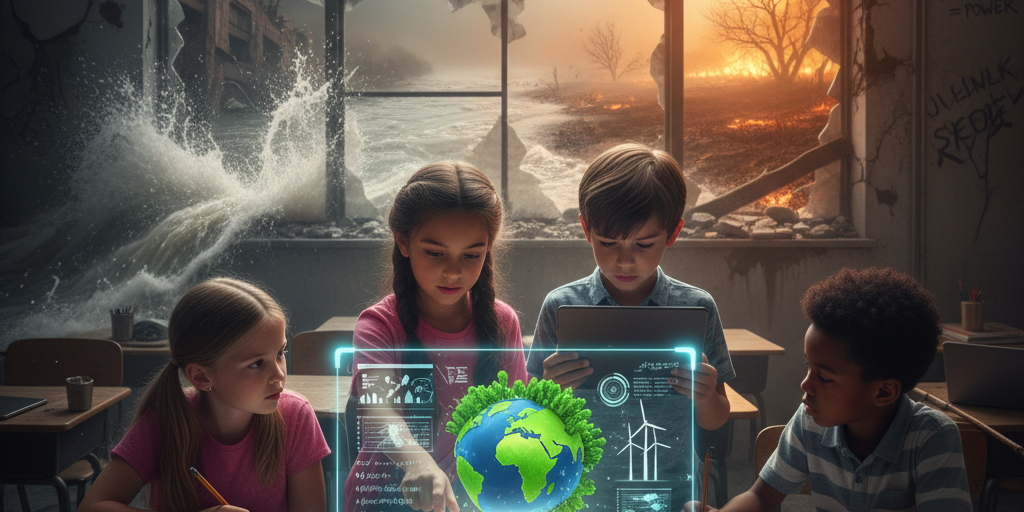
Climate change is not just a distant environmental concern, but it is a present and intensifying determinant of child health, development, and wellbeing. Although children contribute the least to greenhouse gas emissions, they face a disproportionate burden of climate-related risks. From pregnancy through adolescence, climate change acts as a risk multiplier because it interacts with poverty, inequality, and fragile social systems. Consequently, these combined factors shape long-term health and developmental outcomes [1, 2].
Disproportionate Vulnerability Across the Life Course
Children are more vulnerable to environmental stressors than adults because their bodies and immune systems are still developing. As a result, they are more sensitive to heat, air pollution, and infectious diseases [3]. Moreover, exposure to extreme heat and polluted air during pregnancy and early childhood increases the risk of preterm birth, low birth weight, and impaired neurodevelopment [4, 5].
In addition, climate change worsens undernutrition through its effects on food systems, water availability, and household livelihoods. For example, droughts, floods, and changing rainfall patterns reduce agricultural productivity. Therefore, the risk of stunting and wasting among young children increases, particularly in low- and middle-income countries [6, 7]. At the same time, the geographic spread of climate-sensitive diseases, such as dengue, malaria, and diarrheal infections, continues to expand. Consequently, children are disproportionately affected because they have higher exposure and lower immunity [5].
Education, Protection, and Psychosocial Impacts
The impacts of climate change on children extend beyond physical health and affect education, protection, and psychosocial wellbeing. Extreme weather events often damage schools and interrupt learning. As a result, many children experience learning losses and higher dropout rates, particularly girls and children with disabilities [8]. In addition, climate-related economic shocks place pressure on households. Consequently, some families rely on negative coping strategies, such as child labor, early marriage, or withdrawing children from school [2].
Psychosocial effects are also an important part of climate risk. Exposure to disasters, displacement, and environmental instability is associated with anxiety, depression, and post-traumatic stress among children and adolescents [9]. Moreover, increasing awareness of climate change has led to “climate anxiety” among many young people, which reflects concerns about environmental damage and uncertainty about the future [10].
Inequality and Intergenerational Justice
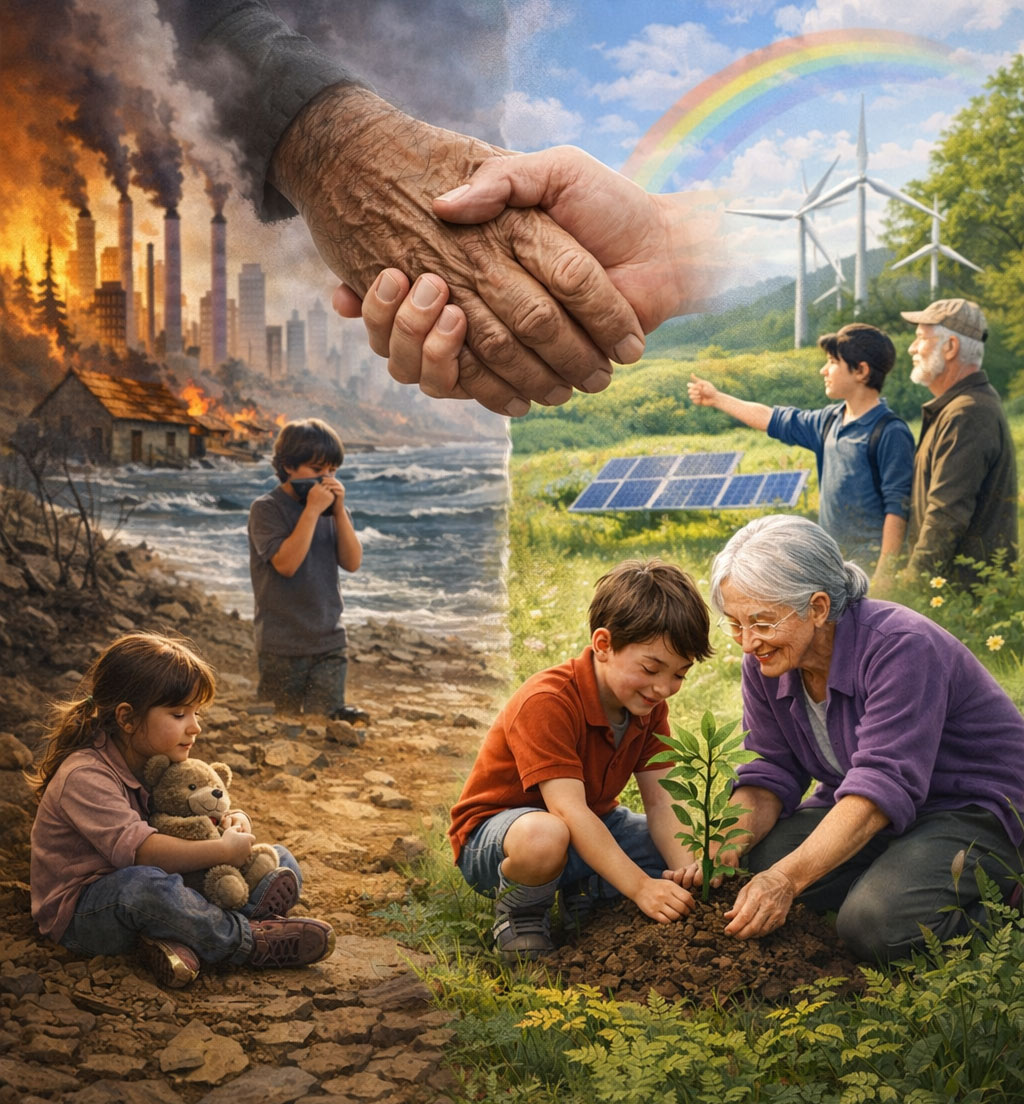
Climate impacts on children are unevenly distributed, reflecting and reinforcing existing social inequities [1]. Children living in informal urban settlements, small island developing states, drought-prone rural areas, or conflict-affected settings face compounded vulnerabilities due to limited access to health care, education, and social protection [1]. These patterns raise fundamental concerns of intergenerational justice: current policy choices determine the environmental conditions that today’s children will inherit, despite their limited voice in decision-making processes [11].
From a rights-based perspective, climate change threatens multiple dimensions of children’s rights, including the rights to health, education, development, and protection [2]. International frameworks increasingly recognize the need for child-centered climate policies, emphasizing both protection from harm and participation in climate governance [2].
Toward Child-Centered Climate Action
Addressing climate change through a child-centered lens requires integrating children’s needs and rights into mitigation, adaptation, and development planning. Priority actions include:
- Climate-resilient health systems that safeguard maternal, newborn, and child health under extreme weather and disease pressure [5].
- Resilient education systems, including safe school infrastructure and disaster preparedness to ensure continuity of learning [8].
- Social protection and nutrition programs that buffer climate-related food insecurity and income shocks affecting households with children [7].
- Meaningful participation of children and youth in climate decision-making, recognizing them as stakeholders and agents of change rather than passive victims [2].
- Evidence suggests that investments in child-focused adaptation and mitigation yield long-term social and economic returns by strengthening human capital and societal resilience [12].
Conclusion
Climate change is fundamentally a child health, child rights, and intergenerational equity issue. Its impacts extend well beyond environmental degradation, shaping physical health, mental wellbeing, education, and social protection across generations. Policies that fail to prioritize children risk entrenching inequality and preventable harm for decades to come. Conversely, child-centered climate action offers a pathway to more equitable, resilient, and sustainable futures, where protecting the environment also means safeguarding the foundations of human development.
References
- IPCC. Climate Change 2022: Impacts, Adaptation and Vulnerability. 2022; Available from: https://www.ipcc.ch/report/ar6/wg2/.
- UNICEF, The Climate Crisis is a Child Rights Crisis. 2021.
- Sheffield, P.E. and P.J. Landrigan, Global climate change and children’s health: threats and strategies for prevention. Environmental health perspectives, 2010. 119(3): p. 291.
- Bekkar, B., et al., Association of air pollution and heat exposure with preterm birth, low birth weight, and stillbirth in the US: a systematic review. JAMA network open, 2020. 3(6): p. e208243-e208243.
- WHO, COP24 special report: health and climate change. 2023.
- Picetti, R., et al., Effects on child and adolescent health of climate change mitigation policies: A systematic review of modelling studies. Environmental research, 2023. 238: p. 117102.
- FAO, The State of Food Security and Nutrition in the World 2023. 2023.
- UNESCO, Education and Climate Change: Learning to Act for People and Planet. 2022.
- Clayton, S., et al., Transformation of experience: Toward a new relationship with nature. Conservation letters, 2017. 10(5): p. 645-651.
- Hickman, C., et al., Climate anxiety in children and young people and their beliefs about government responses to climate change: a global survey. The Lancet Planetary Health, 2021. 5(12): p. e863-e873.
- OHCHR. Committee on the Rights of the Child. 2023; Available from: https://www.ohchr.org/en/treaty-bodies/crc.
- Watts, N., et al., Health and climate change: policy responses to protect public health. The lancet, 2015. 386(10006): p. 1861-1914.